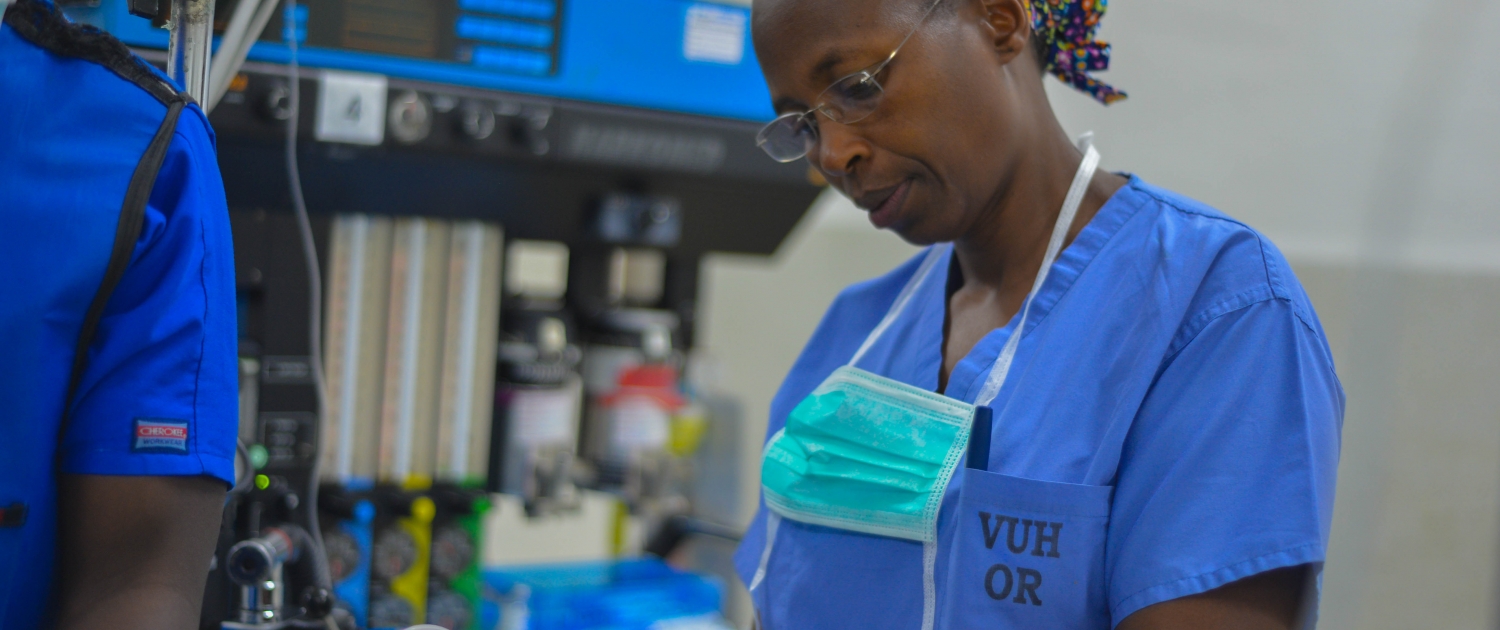
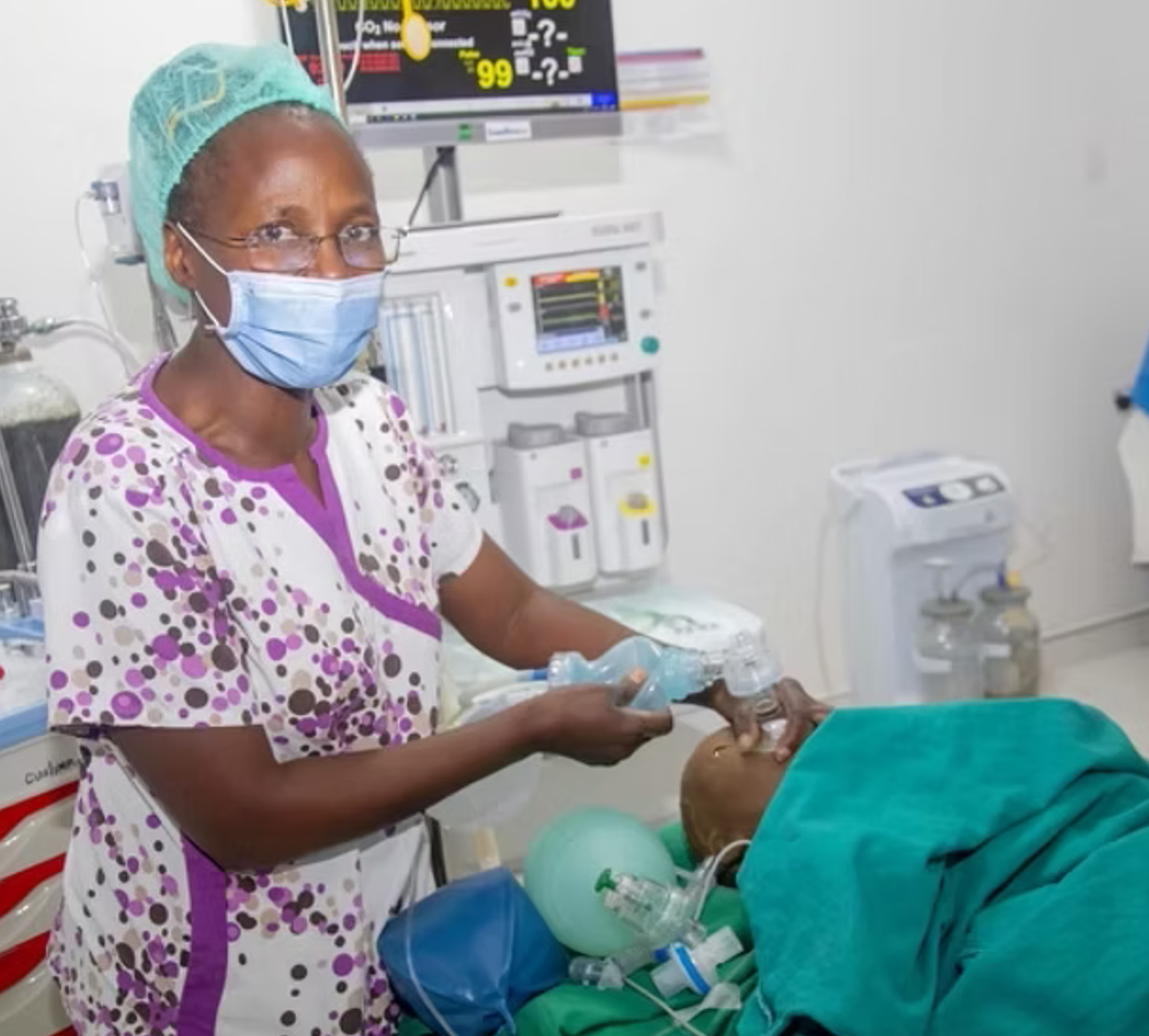
A Conversation with Pioneer Mary Mungai
Nursing isn't just what I do; it's my trade, my passion, and my calling, and honestly, everything I do eventually circles back to it. Over the last few years, I’ve found myself increasingly drawn to the world of nurse anesthesia. It's a critical field that most people outside of healthcare don't even realize exists, yet nurse anesthetists play an indispensable role in expanding access to safe surgical care, both here at home in the States and across the globe.
As my fascination with anesthesia deepened, my mind naturally turned to Kenya, the country my wife Kara and I have been called to serve in ministry. I wanted to understand the landscape: What is the history of nurse anesthesia there? What challenges do they face, and what does the future look like?
During my deep dive into the research, one name kept coming up: Mary Mungai. Mary was the sole woman in the inaugural class of 2008, the very first group of Kenya Registered Nurse Anesthetists to ever be introduced to the country. That milestone didn't happen overnight; it was built on a decade of relentless groundwork to bring safer surgical conditions to remote areas of Kenya where the gaps in care are staggering. I reached out to Mary to see if she would share her story, and she graciously agreed to join me for a virtual conversation.
Take a look at the transcript below as Mary and I discuss the historic beginnings, the hurdles, and the growth of nurse anesthesia in Kenya. It may be lengthy– but it’s worth the read.
The Growth of Nurse Anesthesia in Kenya with Mary Mungai, KRNA, Head Nurse Anesthetist at AIC Kijabe Hospital
The Early Days and the 2008 Inaugural Class
Dan: So, Mary, let's talk about the history of nurse anesthesia in Kenya. How long did it take to establish the program?
Mary: We asked ourselves whether this could happen in our nation. It took us 10 years. Ten years to be able to start a nurse anesthesia program.
Dan: So this started in the 1990s when people were saying, "Hey, this needs to happen."
Mary: The idea started in the 90s, but it didn't officially happen until 2006, when we were allowed and licensed, received a curriculum, and formally started training. A class of 10 people went through the formal training beginning in 2006, and I was among the pioneers in that class. We have never stopped training since then.
Let me say this: we started training cautiously because, as you may know, nurse anesthesia is a heavy calling, and we needed our people to have a lot of experience. So we wouldn't take many students; we would take a small group, graduate them, and then take another class. We continued doing this until 2015, when our biggest college in Kenya, the Kenya Medical Training Centre (KMTC), adopted the training and started offering it at one of their campuses in Kisumu. Down the line, in 2018, Kisii also opened up a nurse anesthesia training program, again at the Kenya Medical Training College. And a few years ago, in 2021, the KMTC college in Mombasa also started training nurse anesthetists.
So we have come a long way, trying to train nurse anesthetists to fill the gaps that our hospitals desperately require—people to go in and anesthetize patients for surgery. For us, the biggest challenges stem from what we've witnessed: watching a mother come in with a ruptured uterus, having lost her baby post-operatively, leaking stool or urine. It was too much to see.
So, we had this vision that these professionals would go to places without dedicated anesthetists to save these mothers. That is what we concentrated on doing. We were very strategic when we started training nurse anesthetists in Kijabe. We looked at regions that were really struggling with anesthesia personnel, brought them in for training, and sent them back to their home areas. For many years, that is what we did because there wasn't any other training for nurse anesthetists. We would bring people from strategic regional hospitals, and as soon as they finished their training, they would go back to their communities to provide anesthesia.
Now, with the Kenya Medical Training College starting these three additional colleges, the numbers are up, and people from even more marginalized regions can still get positions to train and return to their hospitals.
Tailoring the Curriculum for East African Realities
Dan: Now, when the school was first started, how was the curriculum adopted? Did it come from the U.S., the West, or surrounding African countries? How was it tailored for Kenya?
Mary: Very good question. What we did was invite stakeholders to work with us. We did have people coming from other African countries. We had an anesthesiologist who visited and spent quite a number of years with us; eventually, he decided to settle and work in Kijabe. He saw a lot of what was going on and was heavily involved in developing the curriculum.
We also had nurse anesthetists who had been in Kijabe for many years, our school principal (who was experienced in critical care), and other healthcare leaders from across Kenya. Whatever we came up with was evidence-based. We didn't just take a curriculum from the U.S. and bring it here because it might not work. Instead, we adapted it to what is happening in the country.
For example, in the U.S., when you go for nurse anesthesia training, you are required to have critical care experience. If we asked for that in our setting when we started in 2006, how many critical care units did we have in Kenya? Very few. So that could not be a mandatory requirement. Instead, our requirement was a nurse with at least two years of experience in acute care, whether in an emergency department or a medical-surgical setting. That was closer to what we could realistically source. We also conducted interviews to assess their drive and willingness to work anxiously and compassionately with patients before surgery. That is where we started.
Dan: Wow. So how many schools are there right now that teach and provide the nurse anesthesia program?
Mary: We have, of course, four schools inclusive of Kijabe. The other three schools are under the Kenya Medical Training College, making Kijabe the fourth.
Dan: That is amazing. So in your opinion, is the profession still expanding, or has it slowed down?
Mary: Definitely, it is still expanding. Having four places training nurse anesthetists in Kenya is remarkable because, as you have heard, there wasn't anything like this before. Even with those four places, we are so excited that they are there, and nurses can go and train as soon as they are eligible. It is admirable.
The Multidisciplinary Landscape: Working Alongside Physicians and Clinical Officers
Dan: You mentioned that back in the 1990s, there weren't enough anesthesia providers, specifically at mission hospitals. What is the current and previous structure of anesthesia providers in Kenya? I read about something called a "clinical officer anesthetist" who is not a doctor. What does the landscape look like now, and how do nurse anesthetists fit into that? Are there any friction or turf issues?
Mary: In Kenya, we have three cadres that administer anesthesia:
- Physician Anesthesiologists: They attend medical school, go on to a master's program for a four-year specialization, and exit as physician anesthesiologists. We have institutions and universities training them in Kenya.
- Clinical Officer Anesthetists: They undergo a three-year diploma in clinical training, followed by a specialized program (previously 18 months, now 2 years) in anesthesia to get a higher diploma. They work similarly to us, but they come from a clinical officer background rather than a nursing background.
- Kenya Registered Nurse Anesthetists (KRNAs): Trained from the nursing pool.
What I need to mention is that we still do not have enough physician anesthesiologists for the entire country. Not all regions in Kenya have them; they are mostly found in big towns, while some regions do not have a single physician anesthesiologist. That highlights the critical need for clinical officer anesthetists and nurse anesthetists to take care of patients in those regions.
When it comes to how we work together, I would say there was some initial friction when we started because nurse anesthesia was unheard of in Kenya. But as years have gone by, people have embraced the idea, and we now work together harmoniously in many hospitals. For hospitals that have physician anesthesiologists—like where I am in Kijabe—we have always worked together as a team. Currently, we have Kenyan consultant anesthesiologists working alongside us at Kijabe Hospital. We train nurse anesthetists and physician anesthesiologists together in the same operating theaters, running simulations together, consulting each other, and functioning happily as colleagues.
Having said that, I won't ignore the fact that some of my colleagues elsewhere have faced local challenges. But if we don't see ourselves as colleagues and teammates, we fail to understand our purpose. We have a population of over 50 million people in Kenya, and we fall far short of the recommended ratio of anesthesia providers to population. Therefore, the solution is to complement each other and work together so our patients get the best, safest care possible.
I tell my physician colleagues often: what we need to do in our nation is not to fight each other, but to pull together to improve patient care. They teach my students and consult with my colleagues so we achieve better patient outcomes. At the end of the day, our patients don't ask what our specific cadre is; they just want safety and a good outcome. For those without physicians nearby, our graduates do what they can while strictly emphasizing safety, pre-op evaluations, and proper referrals or phone consultations when a case exceeds their scope.
Shifting Demographics: Women Leaders and the Rise of Male Nurses
Dan: That makes a lot of sense. Shifting gears slightly, globally, medicine has traditionally been male-dominated and nursing female-dominated. Has that dynamic changed in Kenya regarding physicians and nurse anesthetists, and does it present any issues?
Mary: It has definitely changed a lot. Women are really stepping up to train in medical specialties. Currently at my hospital, our two Kenyan consultant anesthesiologists are women, and I've seen women leading in different hospitals as well.
When it comes to nursing, we are seeing a fascinating trend. A growing number of males are applying for nursing in Kenya because nursing has become a great, highly employable career. Consequently, we are seeing a strong cohort of men joining nurse anesthesia training as well.
Navigating Resource Scarcity on the Ground
Dan: That's wonderful. When I think of East Africa, I often think of a lack of resources—a very common theme. When a CRNA is sent to a remote location, what challenges do they experience? What does that look like on the ground during a case?
Mary: That is a very important question. I want to say things are changing. When we started, there were immense issues: you would train, go to a remote part of Kenya, and find you didn't have enough anesthetic machines or drugs. It was not easy.
Over the years, this has improved, though we are not completely out of the woods yet. When we started training candidates at Kijabe with the help of pioneer anesthesiologists, we sought donor support so students wouldn't have to pay out of pocket for their training. Upon graduation, we would provide them with basic equipment kits to help them start small at their local hospitals. Later, through devolved governance, county governments equipped hospitals with new theater setups and anesthesia machines, which went a long way.
Sometimes, you might still struggle with drug supplies. If you don't have enough drugs to perform a full general anesthetic, you might pivot to regional anesthesia. As our graduates gain experience, they learn how to navigate these challenges, knowing when to proceed safely and when to say no. We explicitly teach our graduates: Please do not work under pressure to do something that is unsafe. If you need something vital for patient safety and it's missing, say no. Patient safety and good outcomes are what matter most.
A Vision for Pan-African Anesthesia Training and the Faith that Drives it
Dan: You were part of founding the Association of Registered Nurse Anesthetists of Kenya (ARNAK), and you hosted the Pan African Nurse Anesthesia Conference in 2020. What is your grand vision for the future of nurse anesthesia in Kenya and across Africa?
Mary: As Mary, I have a vision, and my vision is not small. We have come a long way from struggling to establish an association in Kenya. Currently, we train at the higher diploma level, but I look forward to the day we train nurse anesthetists at the master's level.
When we hosted the Pan-African Conference in 2020, it was a call to our African colleagues: nurse anesthetists are the majority of anesthesia practitioners across this continent. Even if some countries face deep poverty and limited resources, what we have on the ground is what we must improve. We need to train at higher levels, practice safely, and encourage each other that we can make a difference.
I advocate not just for Kenya, but for all of Africa. Some nations train at very low levels—or historically lacked formal training altogether—yet we have reached out to them to show they can provide quality care even in humanitarian settings.
Why do I do this? Because God placed me in Kenya. I didn't choose where to be born; if I had a choice, maybe I would have chosen Europe or America with all their established resources. But God placed me here in Kenya with a purpose. I don't cry about being born in a developing nation; instead, I ask myself: What impact can I make in this setting?
I only have two hands and can care for one patient at a time. But as a trainer, if I train 10 students and send them out of Kijabe, they can each care for patients simultaneously in rural communities where they understand the culture, climate, and security. When COVID-19 hit and movement halted, mothers didn't stop giving birth, and C-sections still needed to be performed. Who was there for those mothers? Our graduates in local communities.
For me, nurse anesthesia is the true gospel in action—whether serving those who believe in Jesus Christ or people of other faiths. It is about loving our neighbors and serving humanity.
Dan: That is profoundly inspiring, Mary. To wrap things up, for anyone listening or looking to support your mission, what does it look like to sponsor a student in your program?
Mary: It doesn't take a massive amount of money. Sponsoring a student's nurse anesthesia training costs around $700. To us and to a nurse who is supporting a family without a regular salary during training, that is a lot of money. When we select a candidate for sponsorship, we are strategic. We don't necessarily pick someone from Nairobi; we look for a nurse coming from a very rural, high-need area who will return to serve their community. When you do the math—considering how many lives that nurse will impact over a 30-year career—it is an incredible investment in human life that you can't buy with money. We always have many qualified students on our waiting list who desperately want to train. If anyone is ever willing to sponsor a student, we warmly welcome that support.
Dan: Thank you so much, Mary. It has been an absolute blessing talking with you. Asante sana (thank you very much)!
Mary: Thank you, Dan, for doing this. And Asante sana, Mungu akubariki (God bless you). Bye-bye!